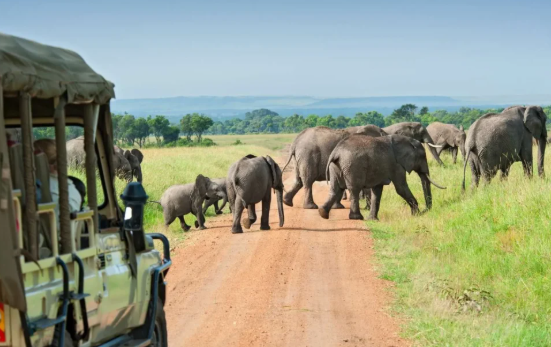
The appeal of a wildlife holiday is easy to understand. Few travel experiences invite such close attention to movement, landscape, and the possibility of something unexpected. Yet a holiday organised entirely around a list of famous animals can become surprisingly narrow. There is more to enjoy when the itinerary leaves room for observation rather than constant pursuit.
The Big Five refers to lion, leopard, elephant, rhinoceros, and buffalo. Seeing them is an exciting possibility, but the quality of a journey also depends on its pace, guiding, accommodation, and the expectations travellers bring with them.
When comparing a big five safari, examine the programme behind the name. World Adventure Tours lists a Tanzania itinerary incorporating Serengeti, Tarangire, Ngorongoro Crater, and Lake Manyara. Consider how the sequence fits your interests rather than assuming that visiting several renowned places guarantees particular sightings.
Replace a checklist with interests
Think about what makes watching wildlife interesting to you. It might be relationships within a group, the challenge of photography, or understanding how animals use different habitats. Tell your guide about those interests without creating a rigid demand.
Choose a few questions you would like the trip to answer. Asking why animals gather in one area or how a guide interprets tracks can deepen an ordinary sighting. This approach gives the journey value even when a hoped-for species remains out of view.
Give each location enough time
Read the proposed schedule carefully and identify how much time belongs to transfers. A programme with several destinations may offer variety, but frequent moves can leave less opportunity to settle into an observation rhythm.
Ask what additional nights would change and which locations best suit your priorities. You may prefer a shorter route with fewer accommodation changes. There is no universally perfect number of stops. The useful question is whether the arrangement matches your available time, stamina, and preferred style of holiday.
Discuss photography before departure
Equipment does not need to dominate the experience, but preparation helps. Ask about vehicle space, luggage allowances, and charging arrangements. Bring a setup you can operate confidently rather than unfamiliar equipment that demands constant attention.
Discuss considerate behaviour with others sharing the vehicle. Allow everyone a chance to observe without treating a sighting as a private photo session. Put the camera down occasionally and watch the scene directly. A collection of images is only one possible record of the experience, not its complete measure.
Define what comfort means to you
Luxury can describe different priorities. One traveller values spacious accommodation; another prefers an itinerary that avoids unnecessary transfers. Decide which aspects matter before paying for upgrades.
Ask about room arrangements, meals, property locations, and the daily sequence. Confirm whether particular accommodation is guaranteed or whether alternatives may be substituted. If you have dietary or mobility requirements, discuss them explicitly before booking. Comfort is more useful when defined through your needs than inferred from an attractive label or a selection of promotional photographs.
Treat responsible observation as part of the experience
Follow the guide’s directions and the rules applying at each location. Do not request behaviour that pressures wildlife or prioritises a photograph over the judgement of the person responsible for the excursion.
Ask questions about local practices and community visits where these form part of the programme. Confirm what is included, whether participation is optional, and how photography permissions are handled. Respectful travel involves understanding the context of an activity instead of assuming every person or place exists to provide a visitor experience.
If your group includes both keen photographers and casual observers, agree on expectations before choosing a departure. Discuss whether a private arrangement would suit those differences and compare its actual cost. A shared understanding of pace can prevent the pursuit of one particular image from dominating everyone else’s time in the vehicle during the holiday.
Leave space for the unplanned moments
Before confirming your booking, review the full quotation and conditions. Make sure the itinerary suits the whole group, including people with different interests. Arrange documentation and personalised travel-health advice through appropriate sources, and keep practical details accessible during the journey.
Once you arrive, let the holiday become more than an exercise in completion. A conversation with a guide, a change in the landscape, or the behaviour of a familiar animal may become the detail you remember most. Planning establishes a workable framework, while curiosity allows the trip to develop its own character. The result can be rewarding even without the exact sequence of encounters you originally imagined.